Last Updated: 4 November 2026
Quick Summary
Exclusive event marketing works because scarcity makes people want in. A curated guest list, a limited number of seats and a personal invitation signal value before a product is ever shown. Luxury brands can then turn that room of qualified prospects into a sales pipeline.
- Define a clear ideal client profile based on purchase history, engagement and brand fit, not wealth alone.
- Write invitation criteria down so the team applies the same standard to every guest.
- Set one objective per event, such as booking 20 private consultations or securing 15 qualified leads.
- Track six funnel stages for every event, from RSVP rate through to cost per acquired client.
- Assign each qualified lead to a named salesperson before the event ends.
Table of Contents
- Why Exclusive Event Marketing Works for Luxury Client Acquisition
- Defining Your Audience and Invitation Criteria
- Crafting VIP Event Invitations That Feel Personal
- Building a Luxury Event Marketing Strategy Step by Step
- Creating Experiential Marketing for Luxury Brands on the Day
- Measuring Client Acquisition from Each Event
- Running Your Post-Event Follow-Up Strategy Without Being Intrusive
- Booking Your First Private Event Next Quarter
- Frequently Asked Questions
Why Exclusive Event Marketing Works for Luxury Client Acquisition
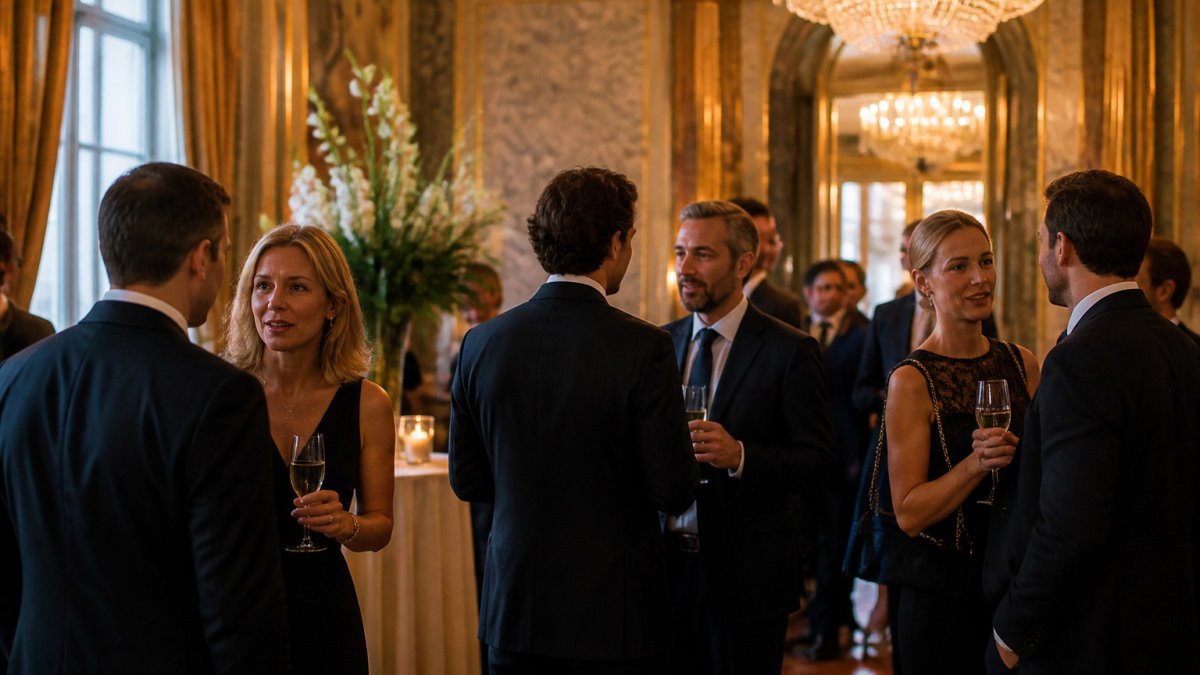
Exclusive events give luxury brands something no advert can: a room full of qualified prospects who chose to show up. When the setting and arrival feel as considered as the welcome, luxury transport for events can help the evening begin with the same sense of occasion it creates inside.
Luxury buyers rarely respond to mass messaging. They respond to access, recognition and the sense that they have been chosen. That is what a guest list does.
This guide walks through how to plan, invite, host and measure exclusive event marketing for luxury client acquisition. It is written as a step-by-step tutorial, so you can work through each stage in order.
Defining Your Audience and Invitation Criteria
Before you send a single invitation, decide who should be in the room. The wrong guests waste the evening and can damage the brand's perception.
Start by defining your ideal client profile:
- Purchase history: Clients who have bought at a higher price point
- Engagement signals: People who have opened emails, visited key pages or attended earlier events
- Relationship strength: Existing clients who could bring in a trusted friend or colleague
Next, set clear invitation criteria. Write them down so your team applies them consistently:
- Who qualifies for a standard invitation
- Who qualifies for a priority or VIP invitation
- Who should be excluded, such as people who have raised complaints or are outside your sales region
A common mistake is inviting everyone who looks wealthy. Qualification matters more than wealth. A smaller room of genuinely interested guests will almost always outperform a crowded one.
Crafting VIP Event Invitations That Feel Personal
Your invitation is the first impression of the event. It should feel written for one person, not sent to a list.

Use the guest's name, reference something they have done with your brand and explain why this particular evening is for them.
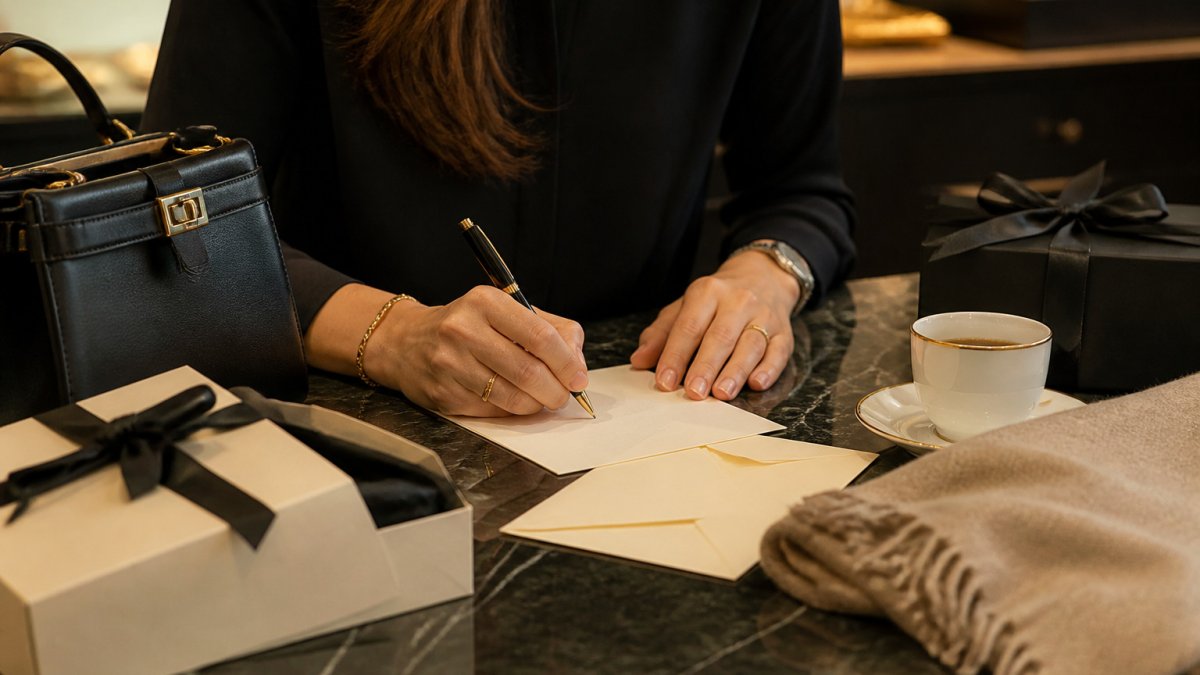
Handwritten notes add a strong personal touch. Pair a physical invitation with a digital follow-up for guests who prefer to RSVP online.
Consider a simple invitation structure:
- Personal opening line using the guest's name
- One sentence on why they were selected
- Date, time, venue and dress code
Building a Luxury Event Marketing Strategy Step by Step
A strong event strategy has a clear sequence. Work through these stages in order:
- Set one objective. For example, book 20 private consultations or secure 15 qualified leads.
- Choose the format. Private dinner, styled showroom evening, trunk preview or client workshop.
- Build the guest list using your qualification criteria.
- Plan the invitation sequence: initial invitation, a reminder and a final call for late RSVPs.
- Confirm the venue, catering and staff roles well before the date.
- Prepare the sales follow-up before the event, not after.
Set the objective first. Every other decision, from the guest list to the room layout, should support it.
Creating Experiential Marketing for Luxury Brands on the Day
On the day, the experience is the marketing. Guests should leave with a memory they can describe to someone else.
Focus on details that feel effortless and considered:
- Arrival: A greeting by name and a clear path to the room
- Atmosphere: Lighting, music and scent that match the brand's tone
- Product: Let guests handle the product, rather than only viewing it behind glass
Plan how your team will capture contact details discreetly and with clear consent. Guests who feel pressured to hand over information rarely return.
Measuring Client Acquisition from Each Event
If you cannot connect an event to revenue, you cannot justify repeating it. Most luxury teams stop at attendance and atmosphere, which is why event budgets are the first thing cut when a quarter tightens. The fix is to treat each event as an acquisition channel with its own funnel, cost base and payback period, and to agree the definitions before the first invitation goes out.
Agree the definitions first
Measurement collapses when two people mean different things by "lead". Write these down and apply them to every event:
- Qualified lead: a named guest who meets your invitation criteria, has given clear consent to be contacted, and has expressed a specific interest (a product category, a consultation, a follow-up request).
- Attributed acquisition: a client whose first meaningful contact with the brand was the event, or who converted within an agreed attribution window after attending.
- Attribution window: the period during which a conversion is credited to the event. Luxury sales cycles are long, so a 90-day window is common for high-consideration categories, with a 30-day window used for lower-ticket lines.
Build the funnel and the cost base
Track the same six stages for every event so results are comparable across the year:
Get prices for your campaign →
- Invitations sent and RSVP rate (RSVPs divided by invitations).
- Attendance rate (attendees divided by RSVPs), a no-show rate above roughly a third usually signals weak qualification or a date clash.
- Qualified leads captured on the night, using the definition above.
- Appointments booked within 30 days of the event.
- Sales closed within the attribution window, with average order value.
- Cost per acquired client, calculated as total event cost divided by attributed acquisitions.
Total event cost should include venue hire, catering, staff time, invitation production and postage, transport, and any keepsake or gifting. Staff time is the line most often omitted, and it is often the largest.
Work out the break-even before you book
A simple break-even calculation keeps the format honest. Divide total event cost by your average first-year client margin to get the number of acquisitions needed to break even. If a private dinner for 16 guests costs a certain sum and your average first-year margin per client is a known figure, you can see immediately whether the room needs to convert two guests or eight.
Attribute without over-claiming
Tag every lead with its source event in your CRM at the point of capture, not retrospectively. Where a prospect attends two events before buying, credit the first touch for acquisition and the most recent touch for conversion, and record both.
Watch out: if you only measure attendees who buy within the same quarter, long-cycle luxury purchases will look like failures and short-cycle ones will look like successes, regardless of the quality of the room.
Review on a fixed cadence
Hold a debrief within a week of the event to review attendance, lead quality and follow-up ownership, then a second review at the end of the attribution window to review closed sales and cost per acquisition. Keep a rolling table of events with the same columns so you can compare formats, seasons and guest-list approaches over several quarters.
The table below sets out the six funnel stages to track for every event, so results stay comparable across the year.
| Stage | What to measure | Note |
|---|---|---|
| Invitations sent | RSVP rate | RSVPs divided by invitations |
| Attendance | Attendance rate | Attendees divided by RSVPs |
| Qualified leads | Leads captured on the night | Must meet the agreed definition |
| Appointments | Booked within 30 days | Counted from the event date |
| Sales closed | Sales within attribution window | Record average order value |
| Cost per client | Total cost per acquisition | Total event cost divided by acquisitions |
Running Your Post-Event Follow-Up Strategy Without Being Intrusive
The follow-up decides whether the event pays off. Many teams wait too long, or send a generic sales email that undoes the atmosphere of the evening. The discipline that separates a productive follow-up from an intrusive one is a named owner, a written cadence, and a record of what the guest actually said.
Hand over to a named salesperson before the event ends
Assign every qualified lead to a named salesperson on the night, not in the following week. The handover note should capture four things: what the guest showed interest in, any personal detail they volunteered, the agreed next step, and the consent they gave for contact. A warm handover prevents guests from repeating themselves and makes the relationship feel continuous rather than restarted.
Set the cadence, then let the guest set the pace
A workable sequence looks like this:
- Day 1-2: A personal thank-you that references something specific from the conversation. A handwritten note carries weight here because it arrives after the digital noise has faded.
- Day 5-7: One relevant piece of content, a styling guide, a behind-the-scenes story, or a preview of a piece discussed on the night. One item, not a newsletter.
- Day 14: An invitation to a private consultation or a viewing, framed as an offer rather than a request.
Watch out: a follow-up that arrives within hours of the event often reads as pressure rather than care. The thank-you should feel like a courtesy, not the opening move in a sales sequence.
Capture data discreetly and with consent
Luxury prospects expect discretion. Collect only what you will use, explain plainly why you are asking, and record consent at the point of capture rather than assuming it (ico.org.uk). Keep notes factual and free of speculation about wealth or personal circumstances; a CRM record that reads like gossip is a liability if the client ever asks to see it. Honour opt-outs immediately and across every channel, and make sure the salesperson who owns the relationship is the same person who handles any data request.
Measure the follow-up itself
Track response rate to the thank-you, appointment conversion from the consultation offer, and the average number of touches before a booking. If the thank-you response rate is low but the consultation offer converts well, the issue is the opening note, not the offer. If neither converts, the problem usually sits in qualification rather than follow-up.
Close the loop with the guest list
At the end of the attribution window, return to the guest list and record the outcome for every attendee: converted, in progress, dormant, or opted out. This record is what makes the next event's invitation criteria sharper and stops the same unresponsive names being invited quarter after quarter.
Booking Your First Private Event Next Quarter
Start small. A private dinner for 12 to 20 guests is easier to control than a large launch, and it gives you clean data to learn from.
Your next steps:
- Confirm your objective and format this week.
- Build a guest list of 40 to 60 names, so you can expect around a third to attend.
- Draft the invitation and write the follow-up sequence before the date is set.
- Book the venue and assign a named owner for each stage.
- Schedule a debrief within a week of the event to review the numbers.
Repeat the process with what you learn. Over a few quarters, your event calendar becomes a reliable engine for qualified luxury clients.
Frequently Asked Questions
How do luxury brands use exclusive events to attract new clients?
Luxury brands use exclusive events to give prospective clients a private, first-hand experience of the brand, rather than an advertisement. Invitations are limited, sent to a carefully qualified list, and framed around access rather than selling. Attendees meet the team, see the product or service in person and build a relationship that is easier to turn into a sale. The events work best when they are tied to a clear follow-up plan, so each guest's interest is captured and passed to sales within days rather than left to fade.
What makes an event feel exclusive to high-value clients?
Exclusivity comes from controlled numbers, a specific reason to attend and a clear sense that the invitation is personal. Keep guest lists small, set a fixed capacity and avoid public ticketing. Choose a venue and programme that suit the audience, and let the invitation explain what makes the evening different. Scarcity works when it is honest: state the limited places plainly rather than inventing deadlines that the team will not keep.
How can personalised direct mail support event invitations?
Personalised direct mail stands out because most high-value prospects receive far less physical post than email. A handwritten or individually addressed letter, sent with an invitation card, signals that the sender has made a deliberate effort. Used alongside email and a follow-up call, it helps an invitation get opened and remembered. Ask your provider how the letters can be tied to your CRM so that responses are logged against the right prospect record.
How do you follow up with VIP event guests without being intrusive?
Send a short, specific thank-you within two working days, referring to something from the evening. Offer one clear next step, such as a private consultation or a preview of the product, and make it easy to decline. Avoid repeated calls or bulk sales emails in the first week. Give guests control over how often they hear from you, and record their preferences so the team does not contact them through channels they have asked to avoid.
Ready to send invitations that look genuinely handwritten? Get prices for your campaign from RoboQuill. Pricing depends on quantity, dates and delivery, so request a quote from our website and we will tailor it to your guest list.
Get prices for your campaign Add roboquill.io as a preferred source on Google →