Table of Contents
- Why Personalised Direct Mail Cuts Through in 2026
- Start With Data: Segmenting for True Personalisation
- Personalised Direct Mail Examples That Get Responses
- Writing Personalised Sales Letters That Feel Human
- Direct Mail Campaign Best Practices for Setup and Execution
- Direct Mail Campaign Tracking: Measuring What Matters
- Common Mistakes That Undo Personalisation
- Frequently Asked Questions
Last Updated: 17 October 2026
Why Personalised Direct Mail Cuts Through in 2026
A personalised direct mail campaign is a physical mailing where the message, offer and wording change based on what you know about each recipient. It works because inboxes are crowded and doormats are not. When a letter arrives with a real name, a real reference to a real purchase, and handwriting in real ink, it gets opened and read.
That is the gap most marketing teams now face. Email open rates are hard to trust, and paid social costs keep climbing. The channels that feel cheapest per send are often the ones getting ignored. A handwritten letter can earn attention that no banner ad can buy.
Below, we break down how to build a campaign that earns replies, from the data you collect to the way you track results.
Start With Data: Segmenting for True Personalisation
The biggest mistake with personalisation is treating it as a copywriting trick. It is not. Real personalisation starts with the data you hold, and most teams hold less than they think.
What to Capture Before You Mail
Before you write a single letter, check what you can reliably pull for each contact:
- Name and title, spelled correctly and checked against the source record
- Last purchase or interaction date, so the letter has a reason to exist
- Product or service bought, including size, colour or tier where relevant
- Lifecycle stage, such as new customer, lapsed, or VIP
- A specific detail, like a test drive, a renewal date or a referral
- Preferred contact channel, so mail supports rather than replaces your other work
A common mistake is mailing a list that has not been de-duplicated or spell-checked. One wrong name undoes the whole effect. Clean your data first, then segment by behaviour rather than demographics. A lapsed subscriber and a first-time buyer need completely different letters.
Watch Out Mailing a list with duplicate records means the same person gets two identical letters. That reads as a mailmerge error, not personal service, and it wastes budget on every duplicate.Personalised Direct Mail Examples That Get Responses
The strongest personalised direct mail examples share one trait: each letter could only have been sent to that one person. Generic flattery does not count. Specific detail does.
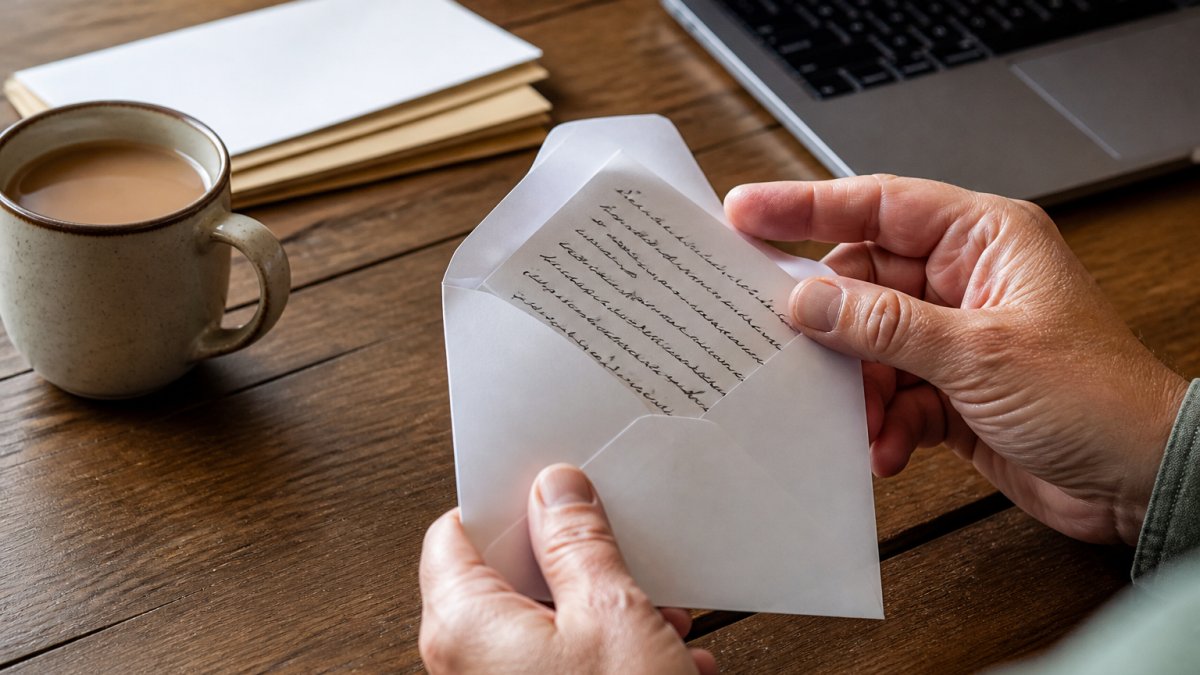
Here are formats that consistently earn replies:
- The reorder nudge. A skincare brand writes to a customer who bought a cleanser eleven weeks ago, naming the product and the usual reorder window.
- The test drive follow-up. A dealership sends a handwritten note the week after a test drive, referencing the model and the colour discussed.
- The renewal reminder. A subscription business writes before a renewal date, naming the plan and offering a simple way to adjust it.
- The VIP thank-you. A fashion house sends a short note to a top-spending client ahead of a new season, with no discount attached.
- The referral ask. A professional services firm writes to a long-standing client after a completed project, asking for one introduction.
Notice what these have in common. Each one names something real. None of them lead with a hard sell. The letter exists to continue a conversation that already started somewhere else.
Writing Personalised Sales Letters That Feel Human
A personalised sales letter is a short, one-to-one message that references a real interaction and makes a single, clear request. It should read like it came from a person, not a platform.
Openers, Offers and the One Ask
The opening line carries the most weight. Skip "I hope this finds you well" and start with the detail that proves you remember them.
Weak: "We'd love to welcome you back as a valued customer."
Strong: "Your last order of the navy wool coat shipped in March, and we've just restocked the matching scarf."
Keep the letter to one page. Use plain words. Write the way you would speak to that person if they walked in. Then make one ask, not three. A letter that asks for a call, a click and a review at once asks for nothing.
Get prices for your campaign →
Pro Tip Read your draft aloud before it goes to print. Any sentence you would not say out loud to a customer should be cut. This one test catches most of the stiffness that kills reply rates.If you are producing letters at volume, the handwriting itself matters. Printed script fonts look uniform, and recipients notice. RoboQuill uses real pens and real ink, with robotic arms that copy natural hand movement, so each letter carries unique pen pressure and spacing. That difference is what keeps a scaled campaign feeling personal.
Direct Mail Campaign Best Practices for Setup and Execution
Good direct mail campaign best practices come down to planning the physical job as carefully as the message. Most failures happen in logistics, not copy.
Work through this sequence:
- Lock the list and clean it. Remove duplicates, fix names, suppress recent complainants and anyone who has opted out.
- Build the data file. One row per recipient, with every personalisation field filled and checked.
- Write and approve the template. Test it with the longest name and the shortest on your list.
- Set the print and handwriting run. Confirm quantities, paper stock and envelope format.
- Schedule despatch. Allow time for production plus postal delivery before your follow-up call or email.
- Prepare the follow-up. Have the call script or email ready to send within a set window of delivery.
Allow realistic lead time. Turnaround depends on volume and the complexity of your personalisation, so confirm dates with your provider before you promise anything to sales. Keep the offer simple and the call to action obvious. A QR code or short web address works well, but give people a phone number too, because some will simply ring.
Direct Mail Campaign Tracking: Measuring What Matters
Direct mail campaign tracking works best when you plan the measurement before the letters go out. Retrofitting attribution afterwards is where most teams lose confidence in the channel.
Attribution Without the Guesswork
Use more than one signal, and match each to the response you expect:
| What you measure | How to capture it | What it tells you |
|---|---|---|
| Unique response codes | A dedicated code per segment | Which list and offer pulled best |
| Tracked web addresses | A short link or QR code per campaign | Clicks and landing page behaviour |
| Inbound calls | A dedicated number or ask-for-name prompt | High-intent replies |
| CRM match-back | Log send date against new deals | Revenue linked to the mailing |
| Reply rate | Count of written or verbal responses | Quality of the personalisation |
Match-back is the important one. If your mailing integrates with your CRM, you can tie each letter to a contact record and watch what happens next. RoboQuill connects with CRM systems, API, Zapier and Make, so send data lands in the same place as your pipeline. That removes the spreadsheet guesswork that made your last mail campaign impossible to judge.
Key Takeaway Measure replies, not just sends. A campaign with a lower volume but a clear match-back to closed deals is worth more than a large mailing you cannot attribute.Common Mistakes That Undo Personalisation
Plenty of campaigns fail for reasons that have nothing to do with the offer. These are the ones we see most often:
- Fake personalisation. Using a first name in the salutation and nothing else. Recipients spot it instantly.
- Wrong data. A misspelled name or an outdated job title signals that nobody checked.
- Too many asks. Three calls to action split attention and reduce response.
- No follow-up. A letter with no planned next step wastes the attention it earned.
- Ignoring preferences. Mailing someone who asked not to be contacted creates a complaint, not a customer. Follow the ICO guidance on direct marketing on consent and lawful basis before you build any list.
- Skipping the test. Sending a full run without a small trial batch means errors reach your whole list.
The fix for most of these is boring: clean data, one clear ask, and a follow-up you have already scheduled. Teams that treat the mailing as the start of a conversation, rather than the end of a campaign, get far more from it.
Frequently Asked Questions
How do you personalise a direct mail campaign at scale?
Build a clean data layer first: name, purchase history, last interaction and any known preferences. Then use variable fields so each letter references something specific to the recipient, such as their last order or a renewal date. Handwritten-style production, like the service RoboQuill provides, lets you keep that personal feel across thousands of pieces without a manual writing team. Test a small batch, check the merge fields, then scale once the response pattern is clear.
What should you include in a personalised direct mail letter?
A strong letter has four parts: a specific opener that proves you know the recipient, one clear reason you are writing, a single call to action with a deadline, and a simple way to respond. Add a real signature and a handwritten envelope to lift open rates. Avoid stuffing in three offers; one ask per letter performs better. Include a tracking mechanism, such as a unique URL or QR code, so you can tie responses back to the campaign.
How do you measure the success of a direct mail campaign?
Set your metric before you mail. For sales teams that is usually meetings booked; for e-commerce it is repeat purchase rate or reactivated customers; for subscriptions it is churn prevented. Use unique landing pages, QR codes or dedicated phone numbers to attribute responses. Compare the campaign group against a holdout group that received nothing, so you can separate the mail's effect from seasonal noise. Review results at 14 and 30 days after the drop.
How can direct mail work alongside email and other marketing channels?
Use mail where email is weakest: for high-value accounts, lapsed customers or prospects who have gone quiet. A letter can reference an email already sent, and a follow-up email can reference the letter, which reinforces the message. Keep the data in one place so both channels use the same segmentation. Many teams see the best results when mail arrives first and email follows two to three days later, giving the recipient a tangible prompt before the digital nudge.
Digital channels are getting noisier, and the teams that stand out are the ones willing to send something people can hold. If your emails are being ignored and your follow-up calls are going cold, a handwritten letter gives you a second chance at attention. RoboQuill produces real pen-and-ink letters at scale, integrates with your CRM, API, Zapier and Make, and costs less than a human handwriting team. Get prices for your campaign and see how a personalised mailing fits your next quarter.
Get prices for your campaign