Table of Contents
- How Long Does a Direct Mail Campaign Take?
- Stage 1: Data Preparation and List Cleaning
- Stage 2: Creative, Copy and Personalisation
- The Direct Mail Production Timeline Explained
- Stage 4: Royal Mail Delivery and Distribution
- Your Direct Mail Campaign Checklist for Hitting Deadlines
- How Direct Mail Response Rates Affect Your Timeline
- Common Mistakes That Delay Campaigns
- Frequently Asked Questions
Last Updated: 4 October 2026
How Long Does a Direct Mail Campaign Take?
Most direct mail campaigns take two to four weeks from final list sign-off to letters landing on doormats. The direct mail campaign turnaround time splits into five stages, and each one has its own clock. This guide from RoboQuill breaks down every stage, so you can plan backwards from your launch date instead of hoping for the best.
The single biggest delay we see is not printing. It is data. Lists arrive messy, addresses fail checks, and personalisation fields sit empty. Fix that first and the rest of your timeline falls into place.
Below, we walk through each stage with realistic time estimates. You will also find a checklist for hitting deadlines and the mistakes that quietly push campaigns back by a week or more.
The Five Stages of a Campaign
Every campaign moves through the same five stages, in the same order:
- Data preparation and list cleaning
- Creative, copy and personalisation
- Printing, handwriting and finishing
- Delivery and distribution
- Response tracking and follow-up
Each stage depends on the one before it. A delay in stage one pushes everything else back. That is why the data stage deserves the most attention, even though it feels like the least exciting part.
Stage 1: Data Preparation and List Cleaning
Data preparation is the process of checking, correcting and formatting your mailing list before anything gets printed. It is the slowest stage to rush and the fastest to get wrong.
Plan for two to five working days here. The exact time depends on list size and quality. A clean export from your CRM can be ready in a day. A list scraped from three different systems needs longer.
Here is what happens during this stage:
- Remove duplicate records and deceased or gone-away flags
- Run address validation against Royal Mail's Postcode Address File
- Check for missing fields like first names or company names
- Segment the list by campaign purpose and message type
How long should list cleaning take? For most campaigns, two to three working days is realistic for lists under 10,000 records. Larger lists or those with heavy personalisation fields take longer.
Stage 2: Creative, Copy and Personalisation
Creative and copy work runs alongside list cleaning, not after it. This is where you write the letter, design the layout and set the personalisation rules.
Budget three to seven working days. The range is wide because it depends on how many approval rounds your team needs. A single decision-maker can sign off in a day. A brand team with legal review takes a week.
Key tasks in this stage:
- Draft the letter copy and any insert content
- Set merge fields for names, account details or order history
- Agree the tone: formal, warm, urgent or conversational
- Approve the final artwork and personalisation logic
A common mistake is treating personalisation as a last-minute add-on. If you want each letter to feel genuinely written for the reader, the merge fields need to be locked before production starts. Changing them mid-run means reprinting.
The Direct Mail Production Timeline Explained
The direct mail production timeline covers everything between final artwork approval and finished letters ready for collection. For most campaigns, this stage takes three to six working days.
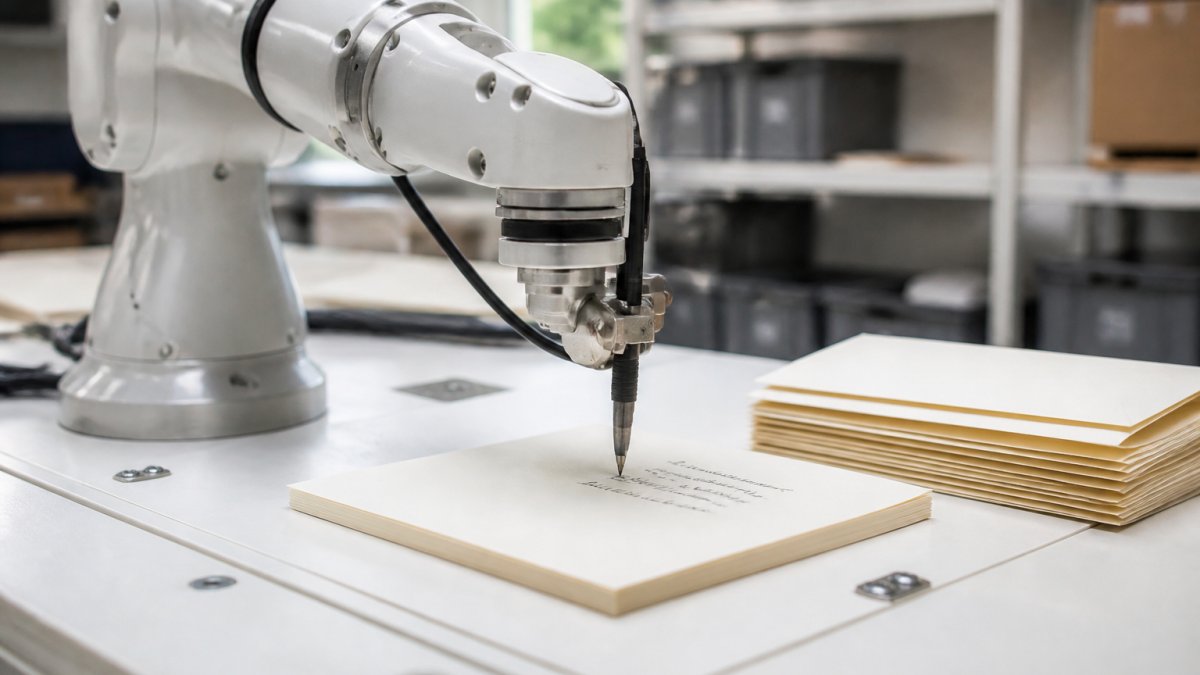
Production splits into three parts: printing, handwriting and finishing. Each has its own duration, and they run in sequence rather than side by side.
At RoboQuill, letters are written with real pens and real ink, not printed fonts. Robotic arms copy natural human hand movement, so every piece has unique pen pressure, spacing and flow. That authenticity is what makes a handwritten letter stand out in a pile of printed post.
Printing, Handwriting and Finishing
Printing covers the letterheads, inserts and envelopes. Allow one to two working days for standard stock.
Get prices for your campaign →
Handwriting is the part most people underestimate. Automated handwriting at scale keeps the personal feel without the wait. Volume drives the time here: a few hundred letters move quickly, while tens of thousands need a scheduled production slot.
Finishing includes folding, inserting, sealing and sorting. Add one to two working days. If your campaign needs a handwritten envelope as well as a handwritten letter, factor in extra time for that second pass.
| Stage | Typical Duration | What Drives the Time |
|---|---|---|
| Data preparation | 2-5 working days | List size and quality |
| Creative and copy | 3-7 working days | Approval rounds |
| Printing and finishing | 1-2 working days | Stock and inserts |
| Handwriting | 1-3 working days | Volume and envelope needs |
| Delivery | 1-3 working days | Service level chosen |
Stage 4: Royal Mail Delivery and Distribution
Delivery is the stage you control least, so build in a buffer. Royal Mail's standard business services typically deliver within one to three working days after collection, depending on the service you choose.
Check current service levels and collection cut-off times directly with Royal Mail's business mail guidance before you set your launch date. Missing a daily cut-off pushes your whole mailing to the next working day.
A few practical points:
- Bulk mailings need to be sorted and bagged to the right specification
- Collection slots must be booked in advance for large volumes
- Seasonal peaks, such as the run-up to Christmas, add delivery time
If your campaign is time-sensitive, work backwards from the delivery date, not forwards from today. That single change in thinking prevents most missed deadlines.
Your Direct Mail Campaign Checklist for Hitting Deadlines
A direct mail campaign checklist keeps every stage on track and stops small delays from snowballing. Print this off and tick it as you go.
- Confirm the campaign goal and target audience
- Export the list and run address validation
- Remove duplicates and gone-away records
- Lock personalisation fields and merge rules
- Draft and approve all copy and artwork
- Book a production slot with your mail partner
- Confirm stock, inserts and envelope specification
- Schedule the Royal Mail collection slot
- Agree how responses will be tracked
- Set a follow-up date for results review
How Direct Mail Response Rates Affect Your Timeline
Response rates shape how much time you should give a campaign before judging it. Direct mail has long been valued for its ability to cut through digital clutter, and the Data & Marketing Association's industry research tracks how mail performs against other channels.
A slow response curve changes your planning. Some replies arrive within days. Others trickle in over two to three weeks. If you judge a campaign after the first week, you may call it early.
Practical implications:
- Allow at least three weeks before measuring final results
- Plan follow-up mailings for non-responders
- Keep the same list segment together for accurate comparison
Higher response rates also mean more inbound work: calls, replies and orders to process. Staff up for the week after delivery lands, not the week it goes out.
Common Mistakes That Delay Campaigns
Most delays trace back to a handful of repeat offenders. Fix these and your direct mail campaign turnaround time shrinks without cutting corners.
- Late list delivery. Every day the list is late is a day the whole campaign is late.
- Approval bottlenecks. One person holding sign-off stalls production for everyone.
- Changing personalisation mid-run. Late edits mean reprints and lost time.
- Ignoring collection cut-offs. A missed slot adds a full working day.
- No buffer for peaks. Seasonal volume slows both production and delivery.
Frequently Asked Questions
How long does it take to launch a direct mail campaign?
A typical campaign takes two to four weeks from finalising your list to letters landing on doormats. Data cleaning usually takes two to three days, creative and personalisation setup around five days, production three to five days, and Royal Mail delivery two to three working days. Handwritten campaigns can add a few days because each piece is produced individually, so build that into your plan early.
What factors influence direct mail production turnaround times?
The biggest factors are list size, data quality, and whether you need handwritten or printed pieces. A clean 5,000-record list moves faster than a 50,000-record list with duplicates and missing addresses. Personalisation depth matters too: a first-name merge is quick, while variable paragraphs tailored to each recipient take longer to set up. Production capacity and Royal Mail's collection schedule also affect the final timeline.
Does personalised mail take longer to produce than standard flyers?
Yes, but not by much. Standard flyers run through a printing press in hours. Personalised letters, especially handwritten ones, are produced piece by piece, so a 10,000-letter run may take three to five working days rather than one. The extra time buys you a tangible, individual piece that stands out in a crowded postbag, which is why many brands accept the slightly longer production window.
How can I speed up my direct mail campaign delivery?
Start with clean data. Deduplicate and validate addresses before you send your list to production, because fixing errors mid-campaign is the most common cause of delays. Approve creative early, lock your send date with your production partner, and choose a delivery service that matches your urgency. If your campaign is handwritten, book your slot in advance so capacity is reserved for your run.
Direct mail deadlines are unforgiving when data, creative and production are managed in isolation. RoboQuill brings them together, writing each letter with real pens and real ink while integrating with your CRM, API, Zapier and Make setup so your list flows straight into production. You get authentic, personalised mail at scale, with unique pen pressure and flow on every piece, at a lower cost than human handwriting teams. Get prices for your campaign and plan your next mailing with confidence.
Get prices for your campaign